Grading
CGC grading, explained
What a grading company does to a comic, what the numbers and label colors mean, and how to decide if a book is worth sending.
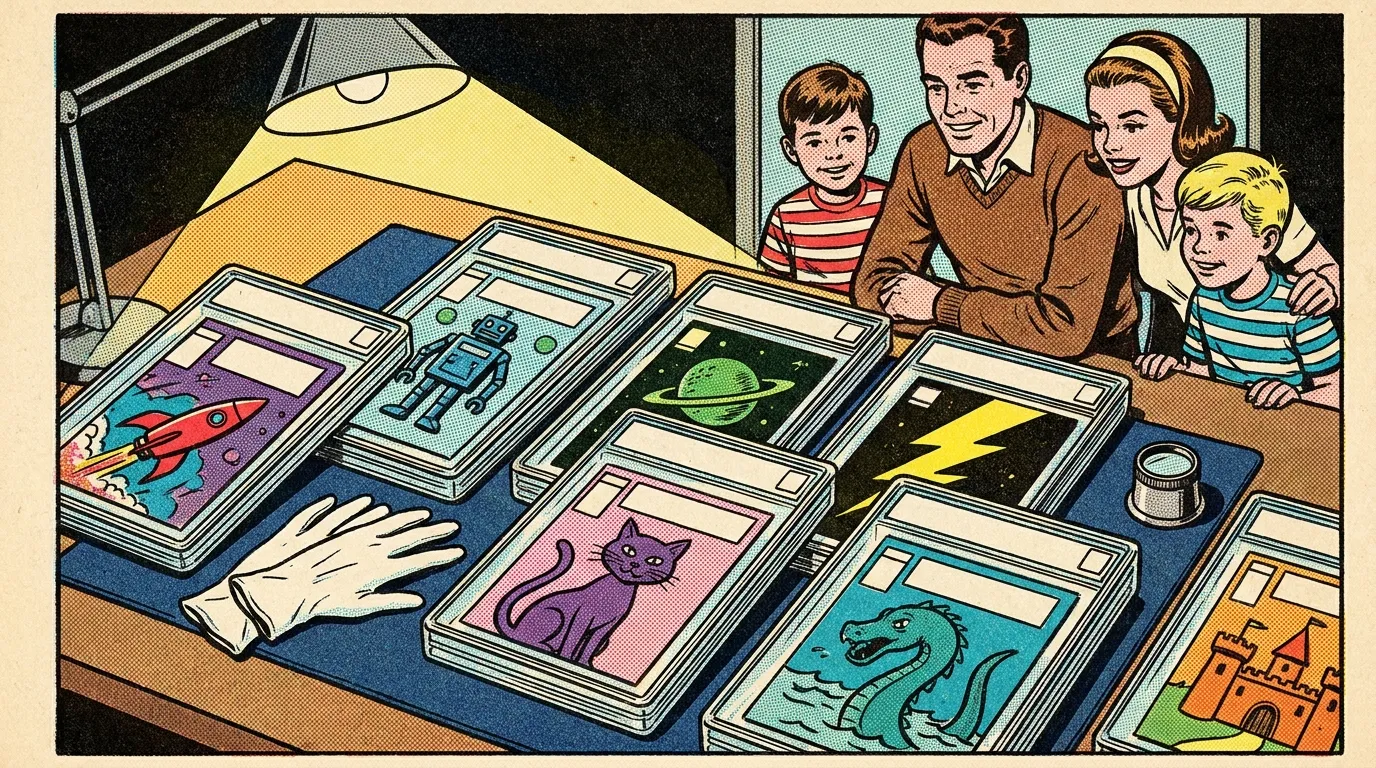
Walk into a comic shop with a wall of valuable books and you'll see comics sealed in hard, clear plastic cases with a label across the top. Those are graded books, often called "slabs." This guide explains what that grade means, how the process works, and how to tell whether one of your books is worth sending.
What grading is
Grading is an independent opinion of a comic's condition. You send a book to a grading company. Its graders examine it, check for restoration, and give it a number on a 10-point scale. The book is then sealed in a tamper-evident plastic holder with a label showing the title, issue, publisher, date, the grade and notes about the book.
The most widely known comic grader is CGC (Certified Guaranty Company). CBCS (Comic Book Certification Service) is another. Both use the same 10-point scale. The point of grading is trust between strangers: a buyer in another state can't hold your book in their hands, but they can read a grade from a company they know.
Grading is about condition and authenticity, not about whether a book is important. A 9.8 copy of a common book is still a common book.
The 10-point scale
Grades run from 0.5 to 10.0. Each number has a traditional name, and the gaps between grades at the top of the scale are small but matter a lot to collectors.
| Grade | Name | In plain terms |
|---|---|---|
| 10.0 | Gem Mint | Flawless. Very rarely given. |
| 9.8 | Near Mint/Mint | Nearly perfect. The grade many modern collectors aim for. |
| 9.4–9.6 | Near Mint | A tiny flaw or two you have to look for. |
| 9.0 | Very Fine/Near Mint | Excellent, with minor wear. |
| 8.0 | Very Fine | Clearly read with care; light wear. |
| 6.0 | Fine | An above-average copy with visible wear. |
| 4.0 | Very Good | A well-read copy with obvious wear. |
| 2.0 | Good | Heavily worn but complete. |
| 1.0–0.5 | Fair / Poor | Heavy damage; may have pieces missing. |
Graders look at the spine, corners, edges, creases, color-breaking bends, tears, stains, staples and how flat and glossy the cover is. CGC labels also note page quality, from white pages down to brittle ones, because paper color is a sign of how a book was stored.
CGC label colors
The color of a CGC label tells you what kind of grade it is before you read a word. The main ones:
- Blue: Universal. A standard grade for a book with no restoration or significant defects that need a special note. This is the label most people want.
- Yellow: Signature Series. The book is signed, and CGC confirmed the signature, usually because a CGC representative witnessed the signing.
- Green: Qualified. A book with one significant defect that the label calls out, such as a missing coupon, or a signature CGC couldn't confirm. The grade describes the rest of the book.
- Purple: Restored. The book has been restored, for example with color touch-up or added paper. Restored books usually sell for well below unrestored copies in the same grade.
CBCS uses its own label colors and terms. Whatever the company, read the whole label, not just the number. The notes explain what you're buying.
Pressing and cleaning
Pressing uses controlled heat, humidity and pressure to flatten bends, dents, waves and some spine stress that don't break the color. Cleaning removes surface dirt. Done well, they can raise a book's grade, which is why many people have books pressed before grading.
Graders generally don't treat professional pressing as restoration. Adding material or color is. Pressing can't fix color-breaking creases, tears, missing pieces or tanned pages, and a bad press can make a book worse. Don't try it with a household iron. If a book is worth pressing, it's worth paying someone who does it regularly.
When grading is worth it
Grading costs money: a grading fee, shipping both ways and insurance, and it takes time. A simple rule: grade a book when the graded version is clearly worth more than the raw book plus every cost of grading. That usually means:
- Important keys in strong condition, where a high grade makes a big difference.
- Older books where buyers want restoration checked by someone else.
- Books you plan to sell to buyers who can't see them in person.
- Signed books, where a Signature Series label confirms the signature.
Grading usually isn't worth it for common modern books, books in rough shape that aren't keys, or anything you want to keep reading. A slabbed book can't be read without breaking the case, and once it's out, the grade no longer applies.
Before you send anything, look up recent sales of the same book in the grade you expect and in the grade below. If the money only works at a 9.8, remember that grades are hard to predict, especially for your own books.
How submitting works
You submit books through the grading company's own process, usually online, choosing a service level based on the book's value and how fast you want it back. Fees, service levels and turnaround times change and vary by service, so check the grader's own site for current details: cgccomics.com for CGC, and the CBCS site for CBCS.
Pack books in new bags and boards, then between stiff cardboard so they can't bend in the mail. Write down what you sent and insure the package for what the books are worth.
How comic shops help
You don't have to do it alone. Some comic shops help customers with grading. Depending on the shop, that can mean:
- Pre-screening: an experienced eye tells you which books are likely to grade well enough to bother.
- Group submissions: the shop sends many customers' books together, which can save on shipping and paperwork.
- Pressing and cleaning, in house or through someone they use.
- Signing events where signatures can be witnessed for a Signature Series label.
Ask what the shop charges, how long its submissions usually take and how books are insured while they're out. Our grading and pressing pages list shops whose reviews or website mention these services.
Questions
- What does a CGC 9.8 mean?
- Near Mint/Mint: a nearly perfect copy. It's the top grade most modern books realistically get, which is why it comes up so often.
- Is pressing restoration?
- Graders generally don't treat professional pressing as restoration. Color touch-up and added paper are, and they earn a purple Restored label at CGC.
- How long does CGC take, and what does it cost?
- It varies by service level and changes over time. Check the grader's site for current fees and turnaround.
- Can I take a comic out of the slab?
- Yes, by cracking the case open, but the grade no longer applies once the book is out.
Find help near you
- Shops that help with grading and pressing.
- Shops with vintage and key issues.
- Shops that host signings.
- Shops that buy comics, if you're grading to sell.