Selling
How to sell your comic collection
Sort it, find the few books that carry the value, then pick the way to sell that fits your time.
Maybe you're clearing out the long boxes you filled as a kid. Maybe you inherited a closet of comics and have no idea what's in it. Either way, the process is the same: sort what you have, find the books worth looking up, and then choose where to sell.
This guide doesn't quote prices. Comic values change, and a price list goes stale fast. It shows you how to look values up yourself, so you know what you have before anyone makes you an offer.
Sort the boxes first
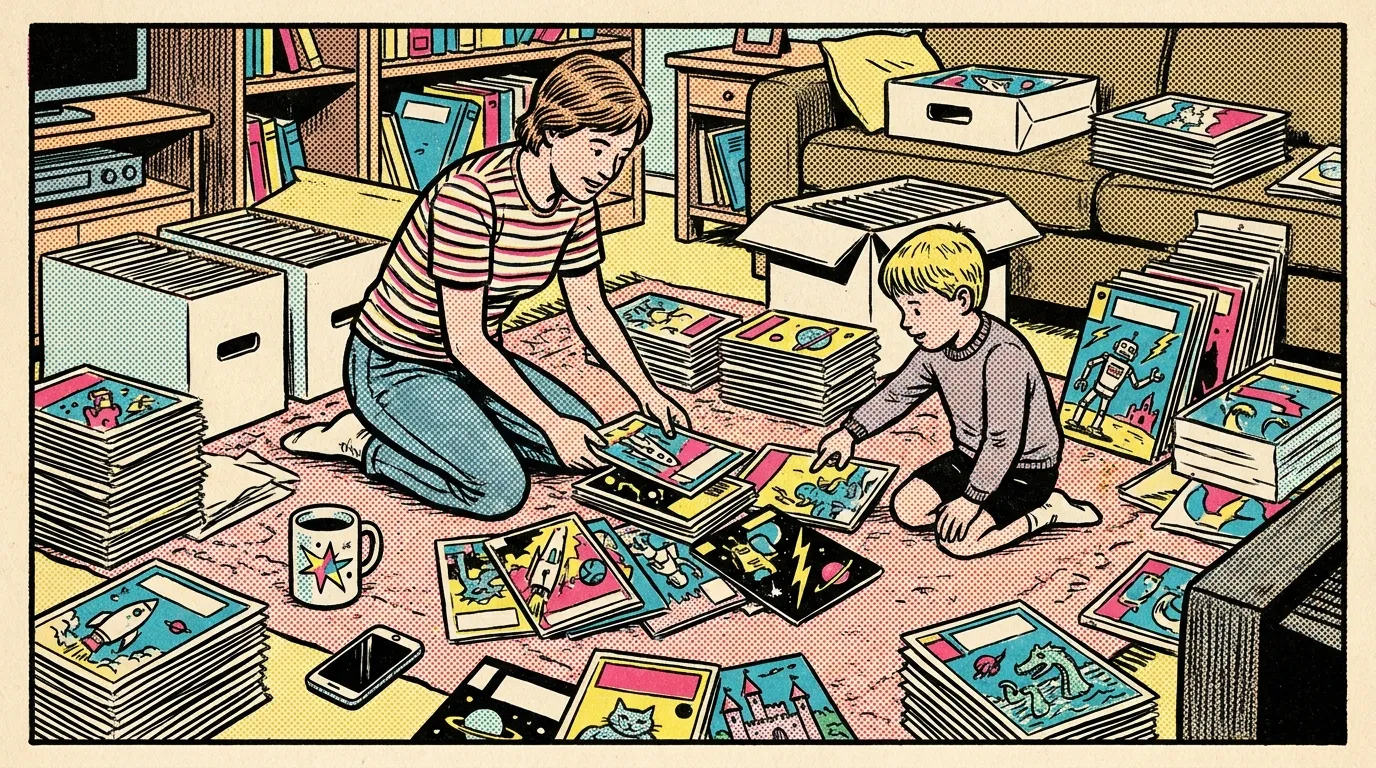
A buyer who can't see what's in a box will price the whole box as bulk. An evening of sorting protects you from that, and it makes every later step faster.
- Group by title. Put every issue of the same series together, then put each run in issue-number order.
- Split by era. Check the cover price and the small print (the indicia) on the first page or inside cover, which gives the publisher and the date. A cover price of 10 or 12 cents means the book is from the 1960s or earlier.
- Pull anything old, signed or unusual. Older books, signed copies, variant covers and anything that looks special go in their own stack.
- Leave the rest together. Recent books in readable shape are usually sold as a group. You don't need to look each one up.
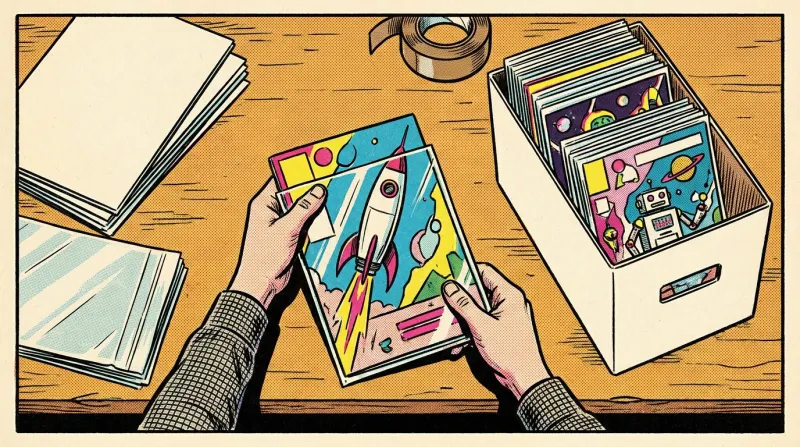
Handle older books by the edges with clean, dry hands. If a book is loose, put it in a bag and board before it gets damaged in the sorting. Our storage guide explains the supplies.
Find the books that matter
In most collections, a small number of books carry most of the value. Collectors call the important ones "keys." A key is usually one of these:
- A first appearance of a character who went on to matter, especially one who later showed up in film or TV.
- An origin, a death or a major turning point in a famous character's story.
- An early issue of a long-running series. Issue #1 of a big title from decades ago can be important; most #1s from recent years are not.
- A famous cover by a well-known artist.
Age matters too. Collectors talk about the Golden Age (roughly the late 1930s to the early 1950s), the Silver Age (roughly the mid-1950s to about 1970) and the Bronze Age (roughly the 1970s to the mid-1980s). Books from those eras are worth checking even in rough shape, because far fewer survived.
How to check what a book is worth
Look at what a book has actually sold for, not what sellers are asking. Asking prices are hopes.
- eBay sold listings. Search the exact title and issue number, then filter to sold items. Match the printing and the cover, and compare books in similar condition.
- Auction house archives. Large comic auction houses publish past results, which are useful for older and high-value books.
- The Overstreet Comic Book Price Guide. The long-running annual guide is good for identifying books and seeing how they rank, though real sales can differ from its numbers.
Condition basics
Two copies of the same issue can sell for very different amounts because of condition. Look at each book you care about in good light and check:
- The spine. Small creases where the book was folded open (spine stress), splits and rolled spines.
- Creases and bends. A crease that breaks the cover color is worse than a soft bend.
- Corners and edges. Rounded, folded or torn corners.
- Missing pieces. Cut-out coupons, missing pages or a detached cover lower value a lot.
- Pages. White pages are best. Tan, brown or brittle pages lower value.
- Stains, writing and water damage. Including a name or a store stamp on the cover.
- Staples. Rust around the staples is a common flaw in older books.
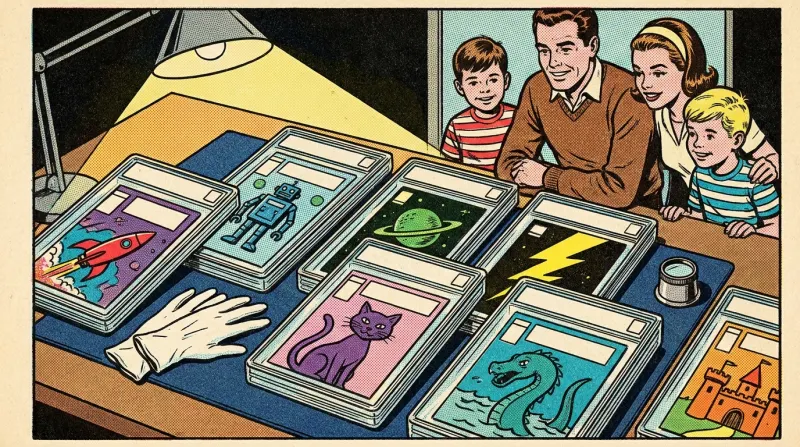
Collectors describe condition with terms like near mint, very fine, fine, very good, good, fair and poor, and with a 10-point number scale. You don't need to grade your own books precisely. You do need to be honest with yourself, because a buyer will be. For valuable books in excellent shape, professional grading can make sense before you sell; read CGC grading, explained first.
Why bulk modern books sell cheap
This is the part that disappoints people. Books from the late 1980s through the 1990s were printed in huge numbers, and many readers bagged and saved every issue. The same is true of most books printed since. Supply is large, so most of those books sell for little, even in great shape.
That doesn't mean a box of 1990s books holds nothing. A few first appearances and low-print books from those years are wanted. But expect most of a modern collection to be priced as bulk, by the box or by the stack, not by the issue. Knowing that ahead of time keeps a fair offer from feeling like an insult.
Where to sell
Each option trades money for time and risk. Many sellers use more than one: the most valuable books go where they earn the most, and the rest goes where it's easiest.
A local comic shop
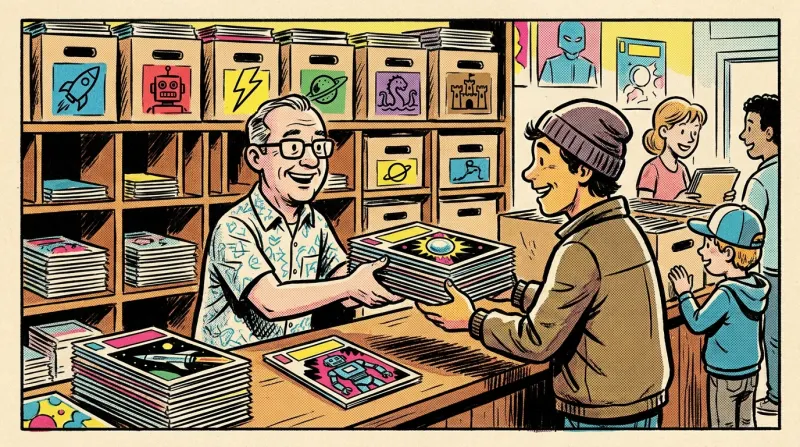
The fastest option. You bring the books in, the shop looks them over, and you can leave with cash or store credit the same day. No photos, no shipping, no buyer disputes. The trade-off is price. A shop has to resell what it buys, pay rent and staff, and hold books that may sit for a long time, so its offer will be below what the books sell for online. That's normal. The question is whether speed and certainty are worth the difference to you.
Shops are also the realistic home for bulk, which rarely pays for the shipping and fees online. Not every shop buys collections, and some only buy certain eras. Our shops that buy comics pages list shops whose customer reviews or own website say they buy.
Online marketplaces
Marketplaces like eBay reach the most buyers, so individual books with real value usually earn more there. You do the work: photos, accurate descriptions, packing, shipping and the occasional return. Selling fees and postage come out of your price, so check them before you list. Ship comics in a bag and board between stiff cardboard, with tracking.
Auctions
Comic auction houses are built for high-value books: important keys, Golden and Silver Age books, and graded copies. They reach serious collectors, but they charge fees, often want books graded first, and take time from consignment to payment. For a box of ordinary books they make little sense.
Conventions
Comic conventions put many dealers in one room, and some will buy. That lets you get several offers in an afternoon. Bring a list of what you have, bring your top books organized, and don't take the first offer just because it's the first.
Cash or store credit?
Many shops offer more in store credit than in cash, because credit is spent on their own stock. If you're still reading comics, credit is often the better deal: it can pay for months of new books or a run of back issues. If you're leaving the hobby, take the cash. Ask for both numbers before you agree, and ask whether the credit expires.
How to approach a shop
- Call first. Ask whether they're buying, what they're looking for, and when the person who does the buying is in. Some shops only buy on certain days.
- Bring a list. Title, issue number, year and a quick condition note for each book you think matters. A list lets the shop tell you on the phone whether the trip is worth it.
- Bring the books sorted. Keys and older books bagged and boarded, the rest grouped by title.
- Don't show up with a truckload unannounced. A big collection takes time to go through. Ask whether to bring a sample or book a time.
- Bring a photo ID. Many shops ask for one when they buy, and some places have secondhand-goods rules that require it.
- Ask how they priced it. A fair buyer looks at the important books one at a time and makes one offer on the rest.
Be wary of anyone who offers one price for a pile of long boxes without opening them, or who pushes you to decide on the spot. For anything valuable, get more than one offer.
Selling for a family member?
Don't clean, press or tape anything, and don't take books out of old bags or holders you find them in. Sort what you can, look up the books that stand out, and get more than one opinion before selling anything that looks old.
Questions
- Are my old comics worth anything?
- It depends on the title, the issue, the age and the condition. Older books and important first appearances can be. Most books from the late 1980s on are common. Look up sold prices for your top books before you decide.
- Do comic shops buy collections?
- Many do, but not all, and some only buy certain eras or titles. Call first. Our sell comics pages list shops whose reviews or website say they buy.
- Should I get my comics graded before I sell?
- Only for books with real value in strong condition. Grading costs money and takes time, and it rarely pays off on common books.
- How much will a shop pay?
- Less than the books sell for to collectors, because the shop has to resell them. Offers vary from shop to shop, so compare if the collection is valuable.
Find a buyer near you
- Shops that buy comics, by state and city, with the review or website line that shows it.
- Shops with vintage and key issues, often the ones that know older books.
- Shops that help with grading and pressing.
- Shops with back issue bins, if you'd rather trade for books.