Storage
How to store comics
Paper doesn't forgive. A few cheap supplies and the right spot in the house keep a collection readable and worth something for decades.
Comics are printed on paper that bends, stains, fades and yellows. The way you store them decides whether a book is still crisp in twenty years or a curled, tanned copy nobody wants. The good news is that comic storage is simple and inexpensive, and it's the same whether you own one long box or a room full of them.
Bags and boards
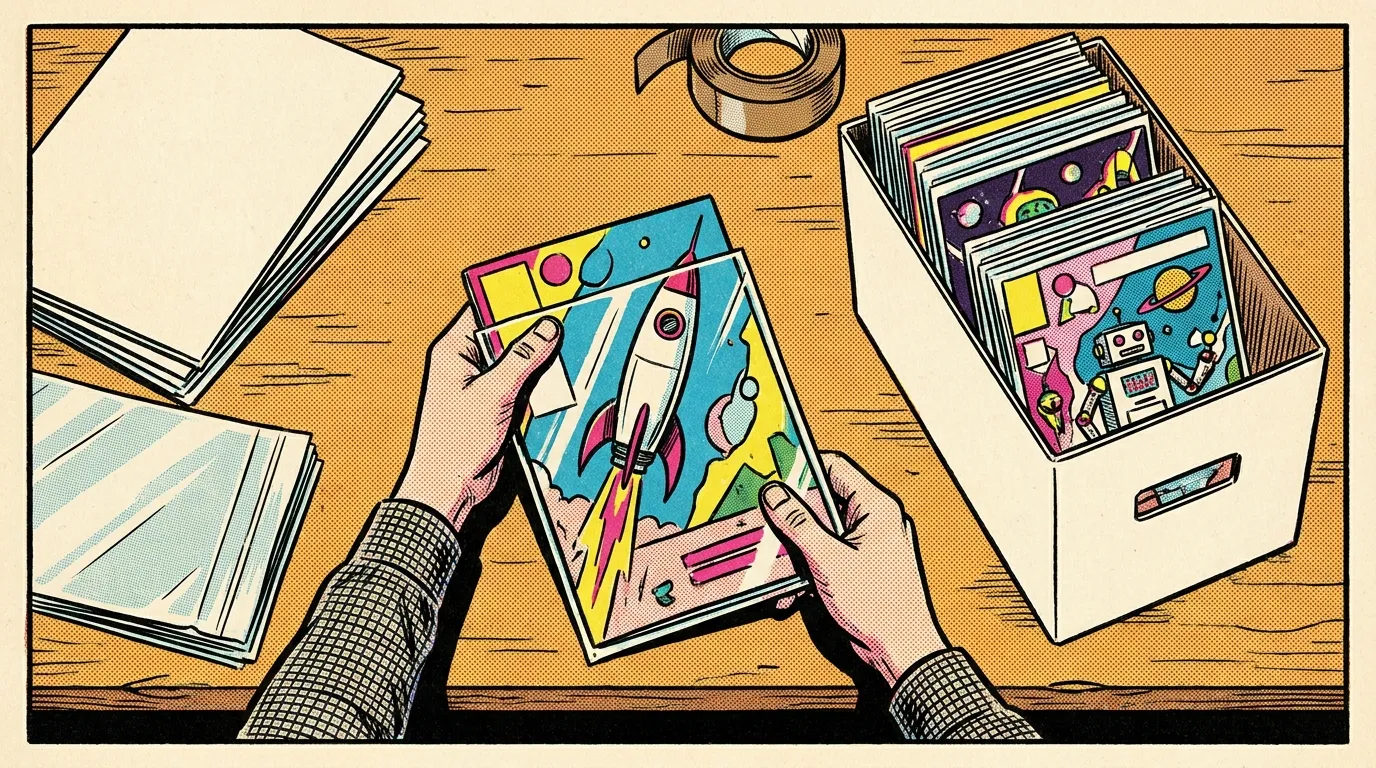
The basic unit of comic storage is a bag and board: a clear plastic sleeve with a stiff piece of cardboard behind the comic. The bag keeps out dust, moisture and fingerprints. The board keeps the book from bending and slumping in the box.
- Buy the right size. Comics have changed size over the decades. Golden Age books are larger, Silver and Bronze Age books are a bit wider than modern ones, and magazine-size comics need their own bags. Packages are labeled by era. A bag that's too tight can bend corners; one that's too loose lets the book slide around.
- Use acid-free boards. Ordinary cardboard is acidic and can tan the pages it touches. Acid-free boards don't. If a board has one coated side, the package will say which side faces the comic.
- Close the flap gently. Fold it over the back of the board. If you tape it, tape the flap to the bag only, never to the comic, and leave a little slack so the tape never touches the book.
- Replace old supplies. Bags and boards from decades ago may be yellowed, brittle or acidic. Swap them out, especially on your better books.
Mylar or polypropylene?
Bags come in a few plastics, and they're not equal.
- Polypropylene is the standard clear, inexpensive bag you'll find at almost every shop. It's fine for most books, but it isn't archival: over the years it can yellow, get brittle and give off chemicals as it ages. Plan to replace these bags every few years.
- Polyethylene is a softer, sometimes thicker alternative with similar limits.
- Mylar (polyester film) is stiffer, clearer and chemically stable, which makes it the archival choice. It costs more, so collectors use it for older and valuable books rather than every modern issue.
A practical approach: polypropylene for your reading copies and bulk, Mylar for keys, older books and anything you'd be upset to lose.
Short boxes and long boxes
Bagged and boarded comics go in boxes made for them. Standard comic boxes are corrugated cardboard, sized to fit comics standing on edge.
- Long boxes hold about twice as much as a short box. They're the most space-efficient, but full ones are heavy.
- Short boxes are easier to lift and move, fit on more shelves, and are a good choice if you'll be going through your books often.
- Plastic comic boxes and drawer boxes cost more but resist damp and crushing better, and drawers make browsing easy.
- Magazine and Golden Age boxes are taller or wider for oversize books.
Label the outside of every box with what's inside, and use dividers by title. Keep a simple list of what you own; it helps for insurance and makes selling far easier later.
Store them upright
Comics should stand upright in their boxes, spines down, like files in a drawer.
- Fill each box snugly, not tightly. Books should stand on their own without leaning. Too loose and they slump and bend; too tight and they get pressed and dented when you pull one out.
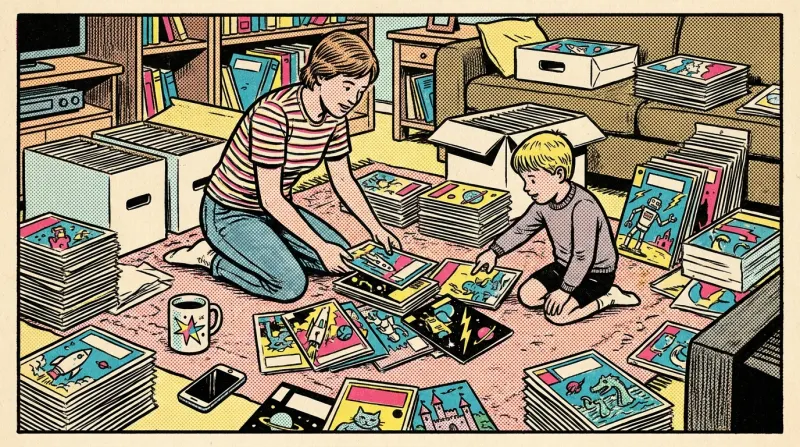
- Don't stack loose comics flat in tall piles. The weight presses dents and spine impressions into the books at the bottom.
- Don't stack full long boxes too high. Boxes crush under weight, and the books inside go with them. Shelving is better than towers.
Heat, damp and light
Where you keep the boxes matters more than which bags you bought.
- Cool and steady. Pick a room people live in, where the temperature doesn't swing much. Heat speeds up the yellowing of paper.
- Dry, but not bone-dry. Damp causes mold, warping and stains. Very dry air makes old paper brittle. Normal indoor humidity is what you want.
- Dark. Sunlight and strong indoor light fade covers, sometimes in a matter of months. Keep boxes closed and away from windows, and rotate any books you display.
- Avoid attics, garages, sheds and damp basements. They swing from hot to cold and from dry to damp.
- Off the floor, away from water. Keep boxes on shelves or raised off concrete floors, and away from pipes, water heaters and outside walls that get damp.
- Keep it clean. Paper attracts silverfish and other pests. A tidy, dry space keeps them away.
Handling
- Clean, dry hands. Skin oils and food stain paper. Some collectors wear cotton gloves for valuable books.
- Slide the book out by the board, not by pinching the comic.
- Support the whole book when you read it. Don't fold the cover back or roll the book.
- Read on a clean, flat surface, away from drinks.
- No rubber bands, paper clips or sticky notes. They dent, rust and leave marks.
- Ask before handling valuable books in a shop. The staff will usually take them out for you.
Trades, manga and slabs
Trade paperbacks, hardcovers and manga can go on a bookshelf like any book. Shelve them upright and snug so they don't lean, which warps spines over time. Heavy omnibuses do best standing straight or lying flat on their own. Keep them out of direct sun.
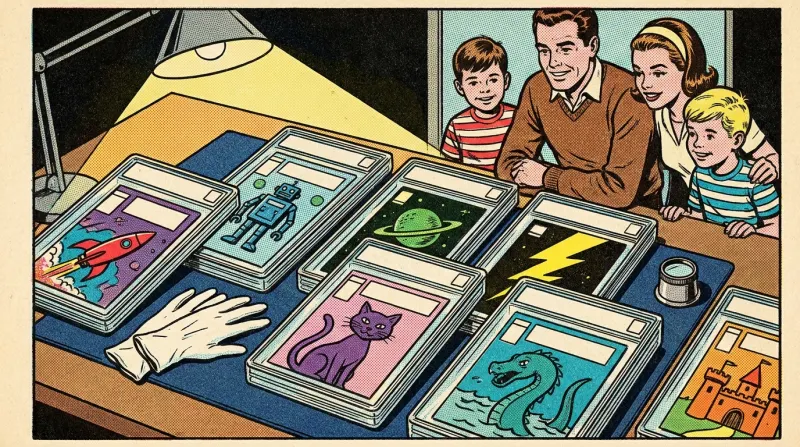
Graded books in slabs are sealed, but they aren't immune to heat and light. Store them upright in boxes made for slabs, and avoid stacking them loose, which scratches the cases.
Supplies are easy to find
Most comic shops sell bags, boards and boxes, and the staff can tell you which bag size fits which era. Ask before you buy a case of the wrong size.
Questions
- How often should I replace comic bags?
- Standard polypropylene bags every few years, or when they look yellowed or feel brittle. Mylar lasts far longer.
- Is Mylar worth it?
- For keys, older books and anything valuable, yes. For bulk reading copies, standard bags are fine if you replace them.
- Can I store comics in the garage or attic?
- It's best not to. Temperature and humidity swing too much. A closet in a lived-in room is better.
- Do trade paperbacks need bags?
- No. Treat them like any good book: upright on a shelf, out of the sun.
Find supplies and shops
- Comic shops by state; most comic shops carry bags, boards and boxes.
- Shops that help with grading and pressing, for books worth more care.
- Shops with vintage and key issues.
- Shops that buy comics, if you're thinning the collection.